
July 12, 2026
Concrete Driveways Built for Minnesota Winters: What Separates a 30-Year Driveway From a 5-Year One
By Trinity Hardscapes
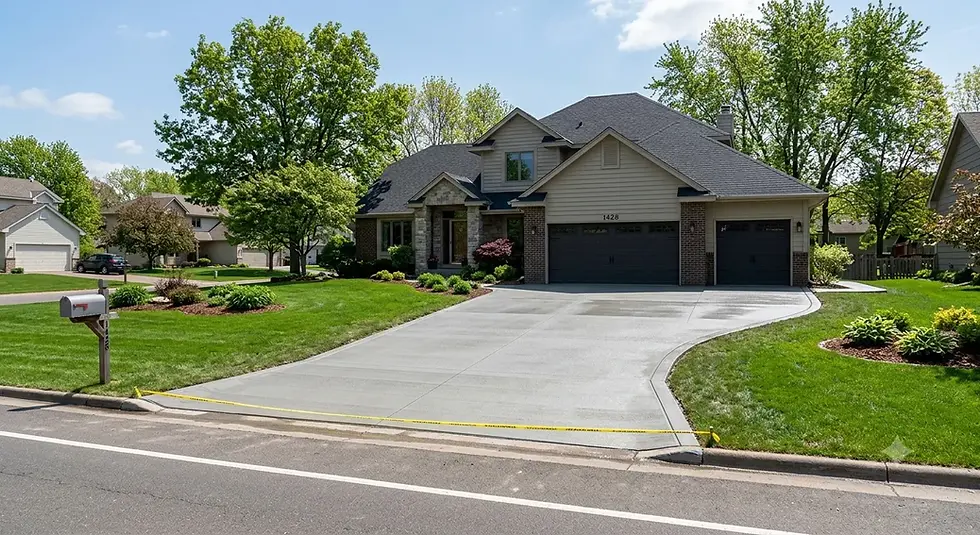
Drive around the Twin Cities and you'll see it everywhere: concrete driveways that are cracked, heaved, and flaking after just a few winters — sitting right next to driveways that still look sharp after decades. Same climate, wildly different results. The difference almost never comes down to luck. It comes down to how the concrete was installed.
If you're planning a new driveway or replacing a failing one anywhere in the Twin Cities metro, here's what actually determines whether it lasts — and what to look for before you hire anyone.
Why concrete fails early in Minnesota
Our winters run concrete through a brutal cycle. Water seeps into the surface, freezes, expands, thaws, and does it again — over and over, all season long. That freeze-thaw cycle is the number-one reason for the cracking, heaving, and surface flaking (called spalling) you see on poorly poured driveways across Minnesota.
Here's the key point: freeze-thaw damage isn't inevitable. Concrete that's installed correctly for our climate can shrug off decades of Minnesota winters. Concrete that's rushed will start failing almost immediately. The climate is the same for everyone — the installation is what varies.
The 5 things that make a concrete driveway last in the Twin Cities
1. Proper base preparation
A compacted, well-drained aggregate base is the foundation of everything. If water can pool and freeze under your slab, it will heave — no matter how good the concrete on top is. This is the step budget contractors rush most, and it's invisible once the pour is done, which is exactly why it gets skipped.
2. Adequate depth and reinforcement
The slab needs the right thickness for its load, plus rebar or wire mesh where the job calls for it. A driveway that carries vehicles needs more than a thin decorative walkway — cutting corners here shows up as cracks within a couple of seasons.
3. Correctly placed control joints
Concrete will move as it cures and as temperatures swing. Control joints give it planned places to crack, so it cracks cleanly along a line instead of randomly across the middle of your driveway. Proper joint spacing is basic craftsmanship that's surprisingly easy to get wrong.
4. An air-entrained concrete mix
Air-entrained concrete has microscopic air pockets that give freezing water somewhere to expand without breaking the surface apart. In Minnesota, this isn't optional — it's the mix difference between a driveway that resists spalling and one that flakes apart.
5. Footings below the frost line
For anything structural — steps, stoops, foundation work — footings need to sit below the frost line so winter ground movement doesn't push your concrete out of place. Skip this and you'll watch your steps pull away from the house.
Get these five right and you have a driveway built to last 30 years or more. Get them wrong and no amount of sealing will save it.
Repair, resurface, or replace?
Not every tired driveway needs a full tear-out. Minor surface cracks can sometimes be sealed. But if you're seeing widespread spalling, sections that have heaved out of level, or cracks wider than a pencil, those are usually signs the base or the original install has failed — and resurfacing over a bad base just buys you a season or two. A good contractor will tell you honestly which camp you're in rather than automatically selling you the biggest job.
What a concrete driveway costs in the Twin Cities
Concrete driveways are generally more affordable up front than pavers, which is a big reason they remain the go-to across the metro. Pricing varies with size, thickness, reinforcement, site access, and whether it's a new pour or a replacement that requires removing and hauling away the old slab. The most reliable way to get a real number is a free on-site estimate — and it's worth getting a couple so you can compare not just price, but what's actually included in the base and reinforcement. A bid that's dramatically lower than the rest is usually lower because something important got left out.
Weighing concrete against a paver surface? Both work well in Minnesota for different reasons — you can compare our concrete services and paver services to see which fits your project.
Serving driveways across the Twin Cities metro
Trinity Hardscapes pours concrete driveways, walkways, slabs, and steps throughout the Twin Cities, including Stillwater and Washington County, Woodbury, Eagan and Lakeville in Dakota County, Maple Grove, Plymouth and Minnetonka in Hennepin County, Shakopee and Savage in Scott County, and communities across Ramsey County. Local crews who understand Minnesota soil, frost depth, and city permitting are what keep a driveway standing for the long haul.
Get a free estimate
With 40+ years of experience and 500+ completed projects, we build concrete that's made for our climate — and we handle permitting for you when your project needs it.
Ready for concrete that lasts? Call 612-459-8865 or request a free quote. We respond within 24 hours on business days.
Frequently Asked Questions
How long does a concrete driveway last in Minnesota? A properly installed concrete driveway typically lasts 30 years or more, even in our freeze-thaw climate — provided it has the right base, reinforcement, control joints, and an air-entrained mix. Poor installation is the number-one reason driveways fail early here.
Why does concrete crack, and can it be prevented? Some hairline cracking is normal as concrete cures. Major cracking usually comes from a poor base, missing reinforcement, or control joints that weren't placed correctly. Proper installation prevents the kind of cracking that actually affects the driveway's life.
When is the best time of year to pour concrete in the Twin Cities? Late spring through early fall is ideal, when temperatures stay consistently above freezing for proper curing. Pours are possible outside that window with cold-weather techniques, but the warmer months are the sweet spot.
Is concrete or pavers better for a Minnesota driveway? Both work well. Concrete is typically more affordable up front and, when installed correctly, is extremely durable. Pavers cost more but flex with ground movement and can be individually repaired. The right choice depends on your budget, look, and priorities.
Do I need a permit for a concrete driveway? It depends on your city and the scope of the project. Driveways and structural work often require a permit, while simple replacements sometimes don't. Trinity Hardscapes handles permitting for you when it's required.